







Where Was Christopher Nolan’s The Odyssey Filmed in Greece?
The confirmed Greek filming locations for Christopher Nolan’s The Odyssey (2026) are:
- Nestor’s Cave
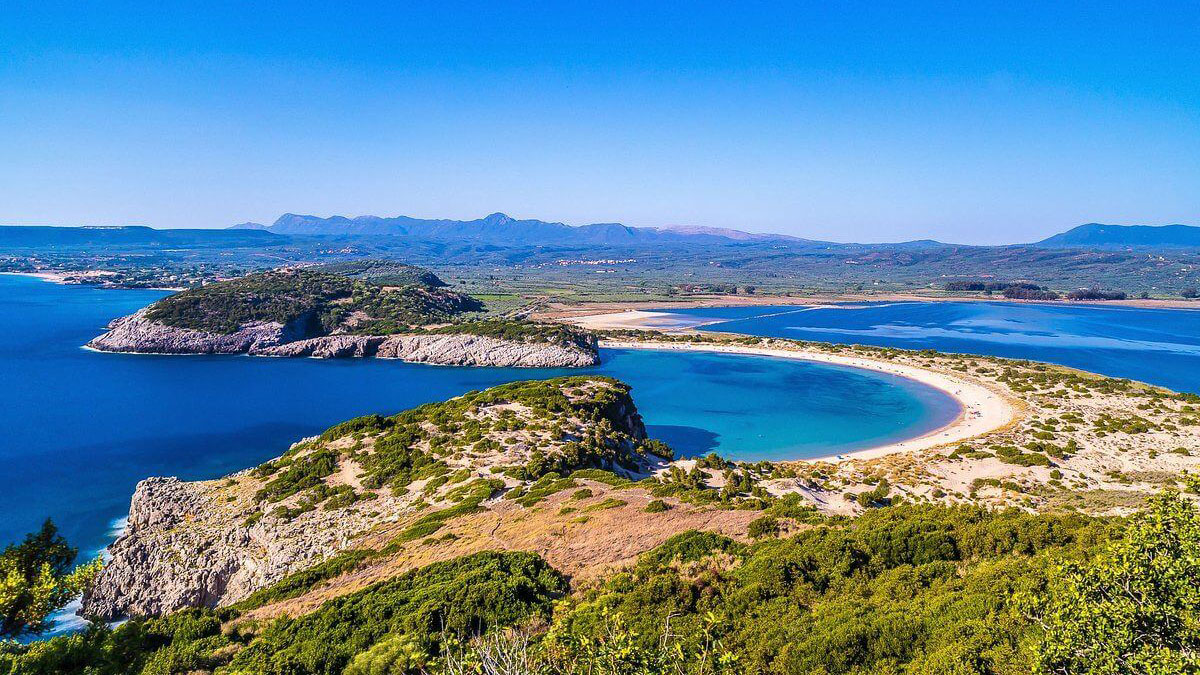
- Voidokilia Beach
- Almyrolakka Beach
- Methoni Castle
- Acrocorinth
These locations are all in the Peloponnese, most of them in the Messenia region and one in Corinthia. The list was officially announced by the Hellenic Film Commission.
However, a journey into Homer’s world should not stop at the film locations. Mycenae, Sparta, the Palace of Nestor and Ithaca carry the deeper archaeological and literary story of the Iliad and the Odyssey.
Discover The Greece Behind The Odyssey, our private and fully customizable Curated Trip!
Homer’s Geography and Nolan’s Filming Locations Are Not the Same
Before beginning the journey, one distinction matters. Homer did not leave us a reliable map of Odysseus’ wanderings.
Some destinations in the Odyssey, including Ithaca, Pylos and Sparta, correspond to places known in the Greek world. Others, such as the islands of Circe and Calypso or the land of the Cyclopes, belong to a fluid mythical geography that scholars have debated for centuries.
Nolan was equally free to create his own cinematic world. A medieval fortress could become a Homeric palace, while a cave in Messenia could become the home of Polyphemus. The film was also produced internationally, so not every place seen on screen is in Greece. This does not make the journey less authentic. It makes it more interesting.
The real experience lies in understanding what belongs to Homer, what archaeology can reveal, and how cinema has reinterpreted both.

1. Ithaca: The Homeland of Odysseus
Every journey through the world of the Odyssey eventually leads to Ithaca.
In Homer’s poem, Ithaca is the kingdom of Odysseus and the home where Penelope and Telemachus wait for his return. It is also the emotional centre of the story. Odysseus is offered immortality by Calypso and comfort in the land of the Phaeacians, yet neither can replace his rocky island and the people who remember him there. The Odyssey is therefore not simply a tale of adventure. It is a story about nostos, the ancient Greek idea of homecoming, and about the identity a traveler hopes to recover after years away.
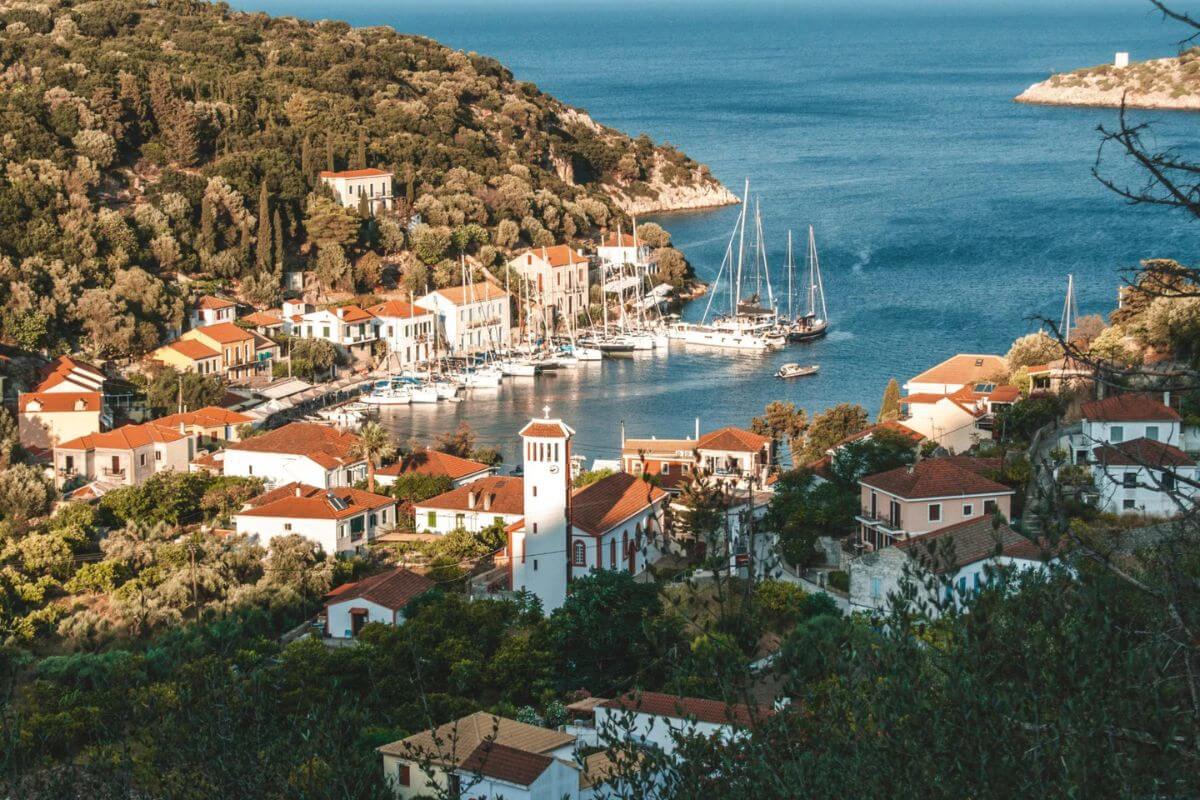
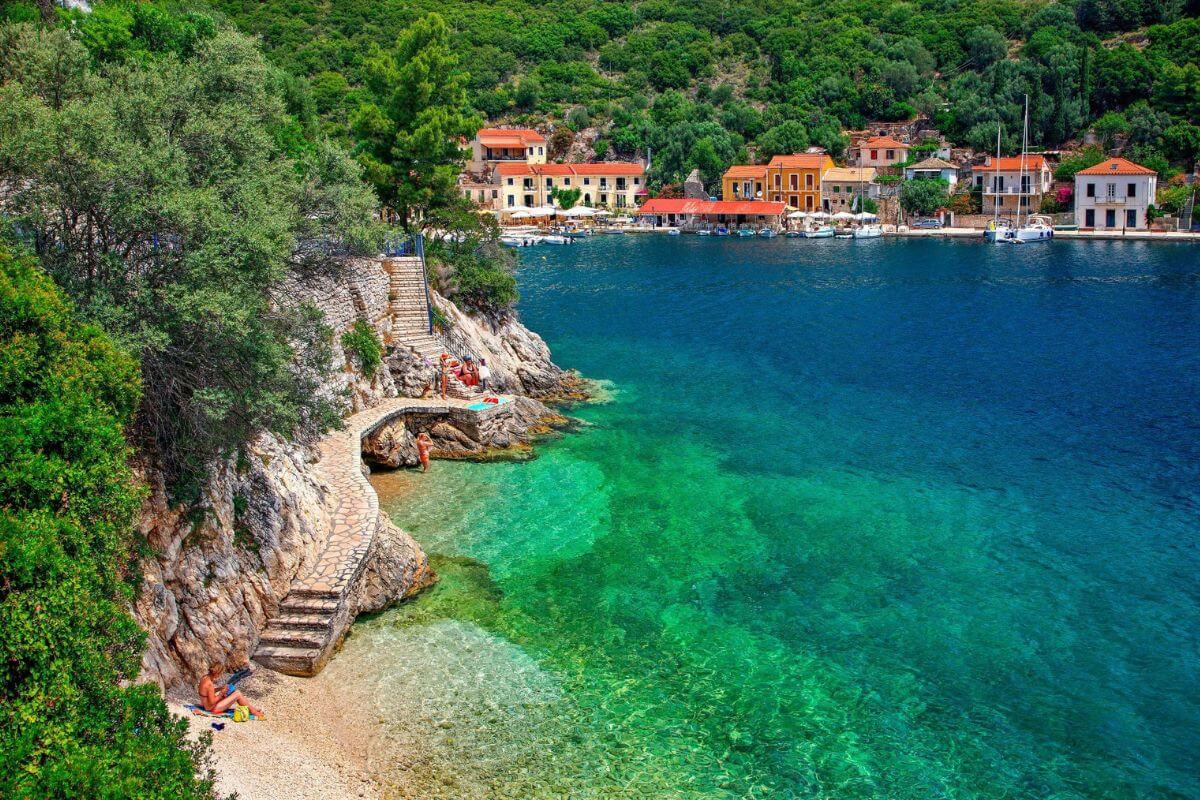
Modern Ithaca is a peaceful and mountainous Greek island located in the Ionian Sea. Its landscape alternates between sheltered harbours, green slopes, white-pebbled coves and villages overlooking the sea. Vathy, the island’s capital, curves around one of the Ionian Sea’s largest natural harbours, while Kioni and Frikes preserve a quieter maritime atmosphere.
Travelers interested in Homer can also explore northern Ithaca and the archaeological site at Agios Athanasios, often known as the School of Homer. The remains have been associated by some researchers with a Mycenaean centre and, more speculatively, with the palace of Odysseus. Archaeology cannot prove that this was the home of Homer’s hero, but the site offers a fascinating opportunity to discuss the relationship between poetry, material evidence and local tradition.
Ithaca was not among the confirmed Greek filming locations for Nolan’s movie. It belongs on this journey for a more important reason: it is the destination that gives the entire Odyssey its meaning.
What to experience in Ithaca:
- Vathy and its natural harbour
- The villages of Kioni, Frikes and Stavros
- Archaeological collections associated with the island’s ancient history
- The School of Homer archaeological site, subject to current access
- A private boat journey along the island’s coves and breathtaking beaches
- Guided storytelling about Penelope, Telemachus, recognition and homecoming
How long to stay: At least three nights, although four to five nights allow the island to be experienced at a more natural pace.
2. Mycenae: The Kingdom of Agamemnon
Long before Odysseus began his journey home, the Greek kings sailed east to fight at Troy. Among them was Agamemnon, king of Mycenae and commander of the Greek expedition.
Mycenae is more closely associated with the Iliad than with Odysseus’ wanderings, but it is essential to understanding the world from which the Odyssey emerges. Agamemnon’s disastrous homecoming also shadows the later poem. His fate becomes a warning for Odysseus, while his son Orestes is repeatedly presented to Telemachus as an example of a son defending his family and inheritance.
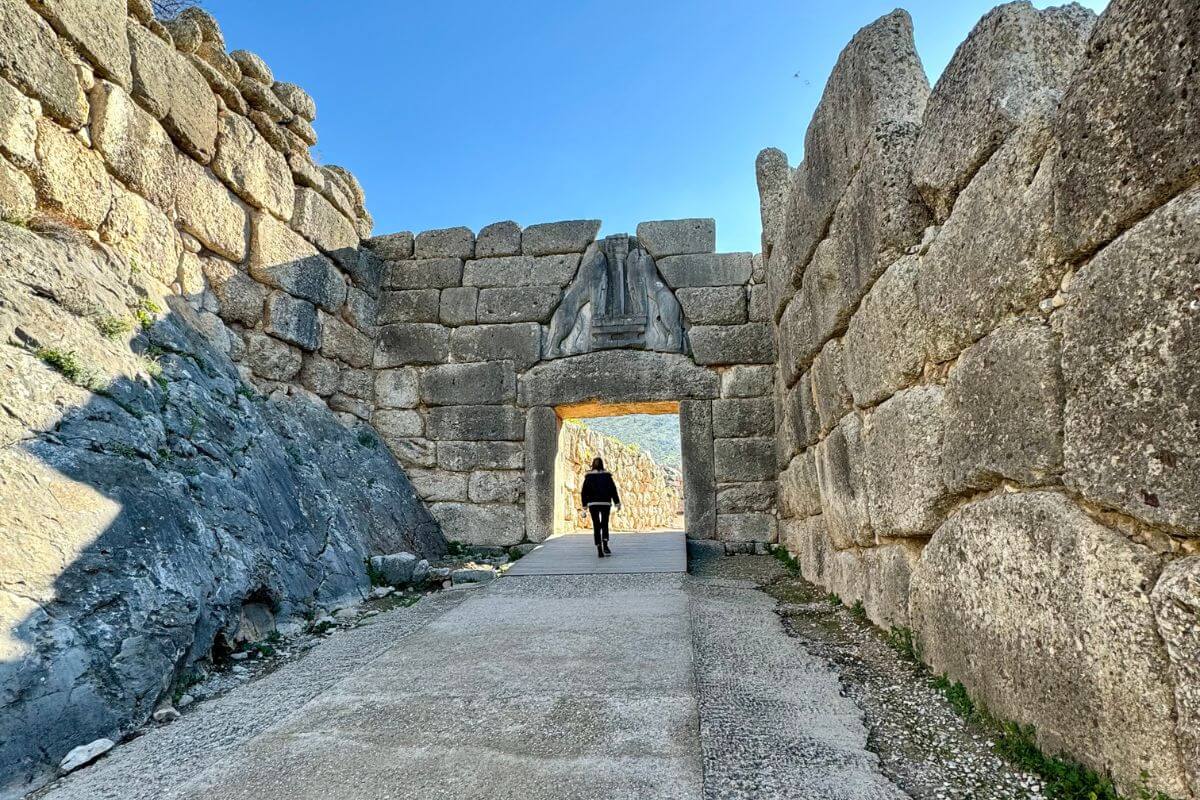
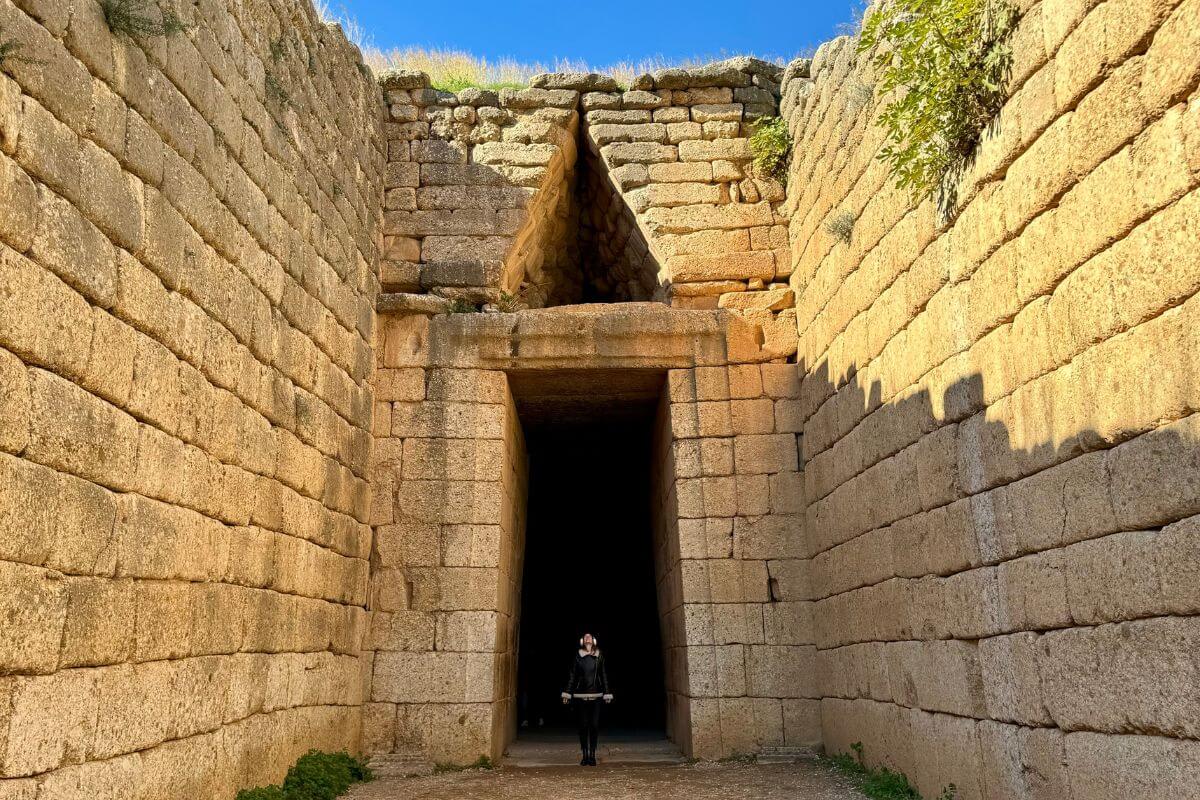
The archaeological site reveals one of the most powerful centres of Late Bronze Age Greece. Enter through the monumental Lion Gate and walk among Cyclopean walls built from stones so large that later Greeks believed only giants could have moved them. Inside the citadel are Grave Circle A, the palace area and evidence of the complex society that once controlled the surrounding Argolis.
Outside the walls stands the Treasury of Atreus, a monumental beehive-shaped tomb traditionally associated with Agamemnon. Its popular name should not be taken literally: archaeology cannot identify its original occupant. Nevertheless, its scale reveals the wealth and authority of Mycenaean rulers.
The civilization now called Mycenaean flourished approximately between 1600 and 1100 BCE. Its palaces, warrior culture and political networks provided part of the historical background from which Homeric tradition eventually developed. UNESCO describes Mycenae as intricately linked with the Iliad and the Odyssey, although the poems were composed centuries after the palace world had disappeared.
Here, visitors encounter an important truth: Homer’s epics are neither straightforward history nor pure invention. They preserve memories of a distant age, reshaped through generations of oral storytelling.
What to experience in Mycenae:
- The Lion Gate
- Grave Circle A
- The Cyclopean fortifications
- The palace area
- The Archaeological Museum of Mycenae
- The Treasury of Atreus
Travel tip: Mycenae can be reached from Athens and combines naturally with Acrocorinth. The Ancient Theater of Epidaurus, also a UNESCO site, is located within a short driving distance. This can be enjoyed as a full-day trip from Athens.
3. Sparta: Where Telemachus Meets Menelaus and Helen
While Odysseus is still absent, Telemachus begins a journey of his own. Guided by the goddess Athena, he leaves Ithaca to seek news of his father. After visiting Pylos, he travels to Sparta and enters the palace of Menelaus and Helen, two figures whose story is inseparable from the Trojan War.
Menelaus has returned home after years of wandering, but his victory carries grief. Helen remembers Odysseus entering Troy in disguise, while Menelaus describes the wooden horse and the final deception that brought the city down. Through these recollections, Telemachus hears his father transformed from a distant absence into a living hero.
Sparta therefore connects the Iliad and the Odyssey. Helen’s departure helped cause the Trojan War, while her memories later become part of Telemachus’ search for truth.
The modern archaeological remains of ancient Sparta are less monumental than those of Mycenae. The city was never defined by the kind of massive, visible architecture found in other Greek centres. Visitors can explore the ancient Acropolis area, the theatre and the Archaeological Museum of Sparta.
For a more direct connection with Menelaus and Helen, the Menelaion stands outside the modern city near the ancient settlement of Therapne. This sanctuary was dedicated to the heroic cult of Menelaus and Helen. It does not represent their Homeric palace, but it demonstrates how the pair were remembered and worshipped in later Spartan society.
What to experience around Sparta:
- The archaeological site of ancient Sparta
- The Archaeological Museum of Sparta
- The Menelaion, subject to access conditions
- Storytelling about Helen, Menelaus and Telemachus
- The differences between Homeric Sparta, historical Sparta and the modern city
How long to allow: One full day is appropriate for travelers with a strong interest in Homer, archaeology or Spartan history. One cannot ignore the rich military history of Ancient Sparta, with the most famous historical event of the battle at Thermopylae (Hot Gates) and the last stand of the 300 of King Leonidas. Nearby Sparta, one can also visit the UNESCO site of Mystras Castle, an imposing Byzantine-era fortress, offering excellent panoramic views of the area around Sparta.
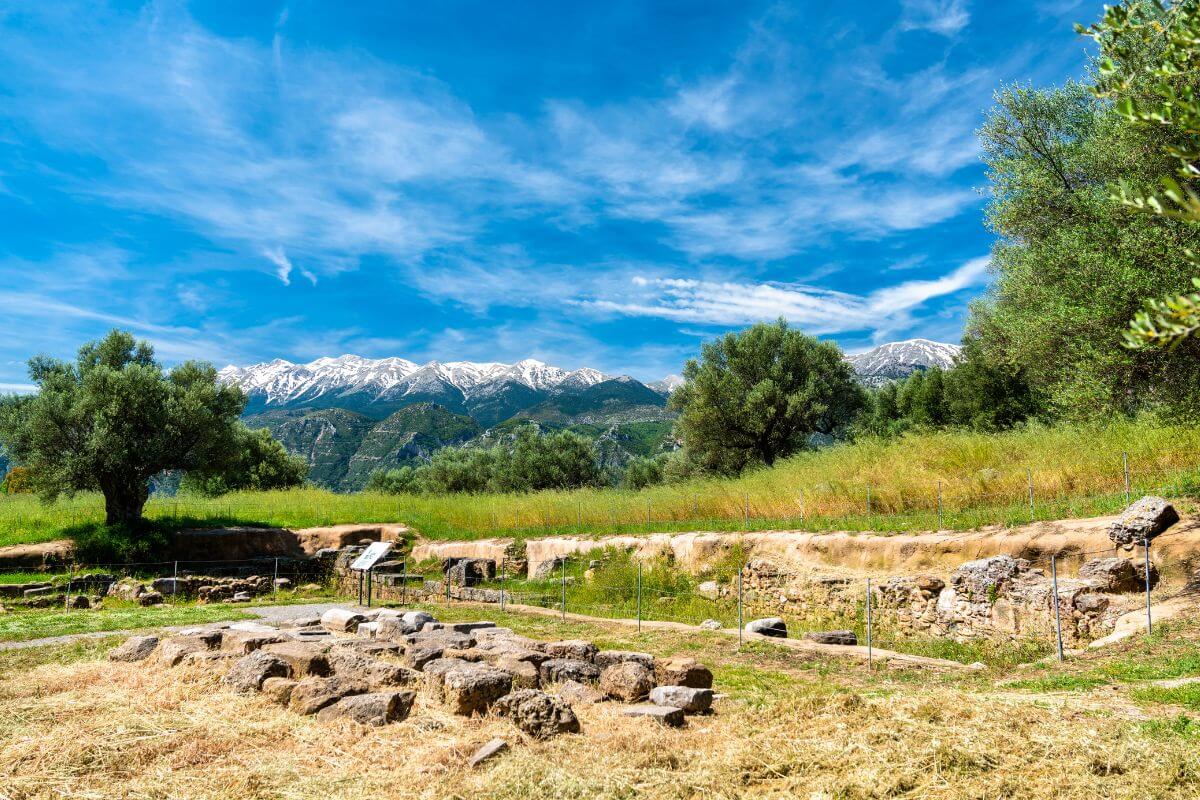
4. Pylos and the Palace of Nestor: Hospitality Before Questions
Telemachus’ first stop after leaving Ithaca is sandy Pylos, the kingdom of Nestor.
When he arrives, the people of Pylos are making offerings to Poseidon beside the sea. Nestor’s household welcomes the strangers, gives them food and includes them in the ritual before demanding to know who they are.
This sequence introduces one of the defining ideas of the Odyssey: xenia, the sacred relationship between host and guest. Hospitality was not simply a matter of good manners. A stranger could be protected by Zeus, and the way a household received a traveler revealed its moral character.
Only after Telemachus has been welcomed does Nestor listen to his story. Although the old king cannot tell him where Odysseus is, he shares memories of Troy and directs him onward to Menelaus in Sparta.
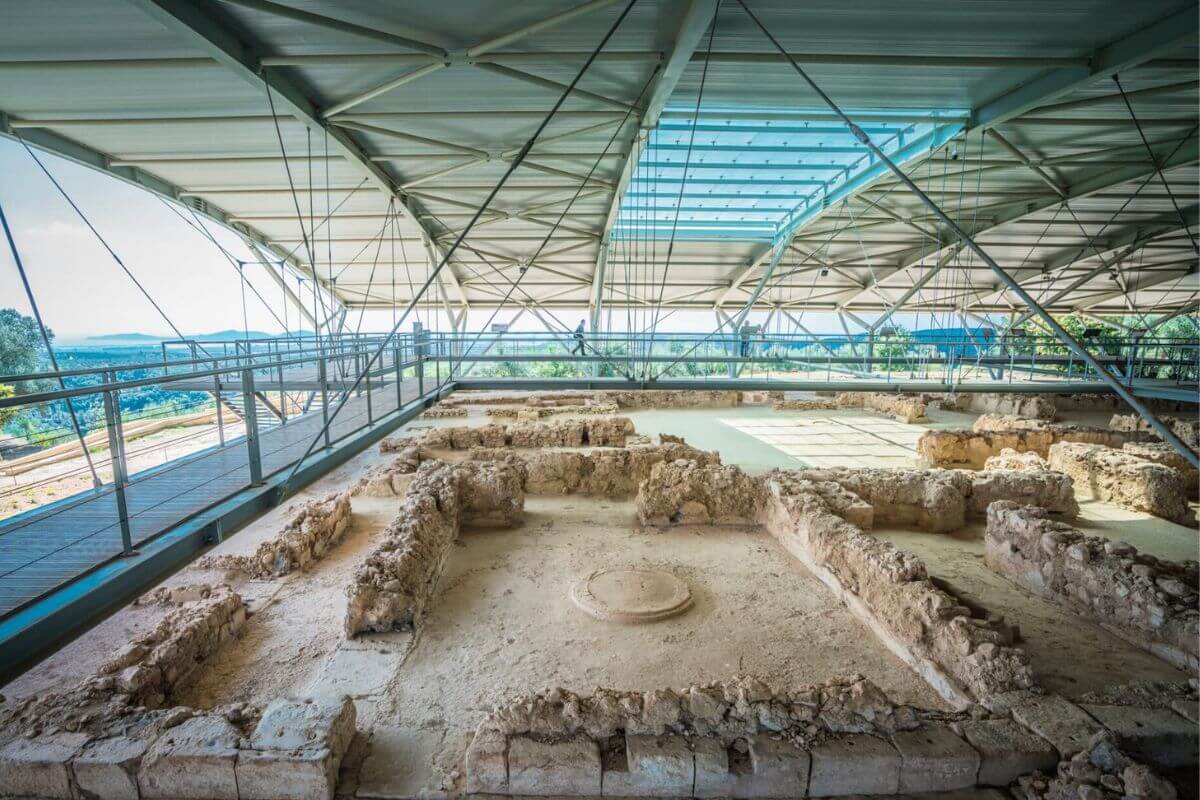
Near modern Pylos, travelers can visit one of the best-preserved Mycenaean palaces in mainland Greece. The site at Ano Englianos is traditionally identified as the Palace of Nestor.
Built shortly after 1300 BCE, the palace served as the administrative centre of a powerful Mycenaean kingdom. Its throne room, storerooms, workshops, ceremonial areas and painted surfaces reveal a complex society very different from the simple world of ruins visible today.
Among its most important discoveries were tablets written in Linear B, the earliest known form of written Greek. These were administrative records rather than poems. They record land, goods, people and religious offerings, giving us a glimpse into the organization of a Bronze Age kingdom.
The palace was destroyed by fire near the end of the Mycenaean period. Ironically, that fire baked and preserved many of the clay tablets that archaeologists would uncover thousands of years later.
The archaeological palace cannot be proven to have belonged to Homer’s Nestor. However, the site preserves a real Mycenaean centre in the region Homer called Pylos, making it one of the closest encounters travelers can have with the historical world behind the epics.
What to experience in Pylos:
- The Palace of Nestor
- The central megaron and throne room
- The palace storerooms and administrative areas
- The famous palace bathtub
- Linear B and the earliest written Greek
- Modern Pylos and Navarino Bay
Do not miss: The modern protective roof and elevated walkways make the palace’s layout much easier to understand than at many open archaeological sites. An archaeologist-led visit adds considerable value because much of the story lies in details that are easy to overlook.
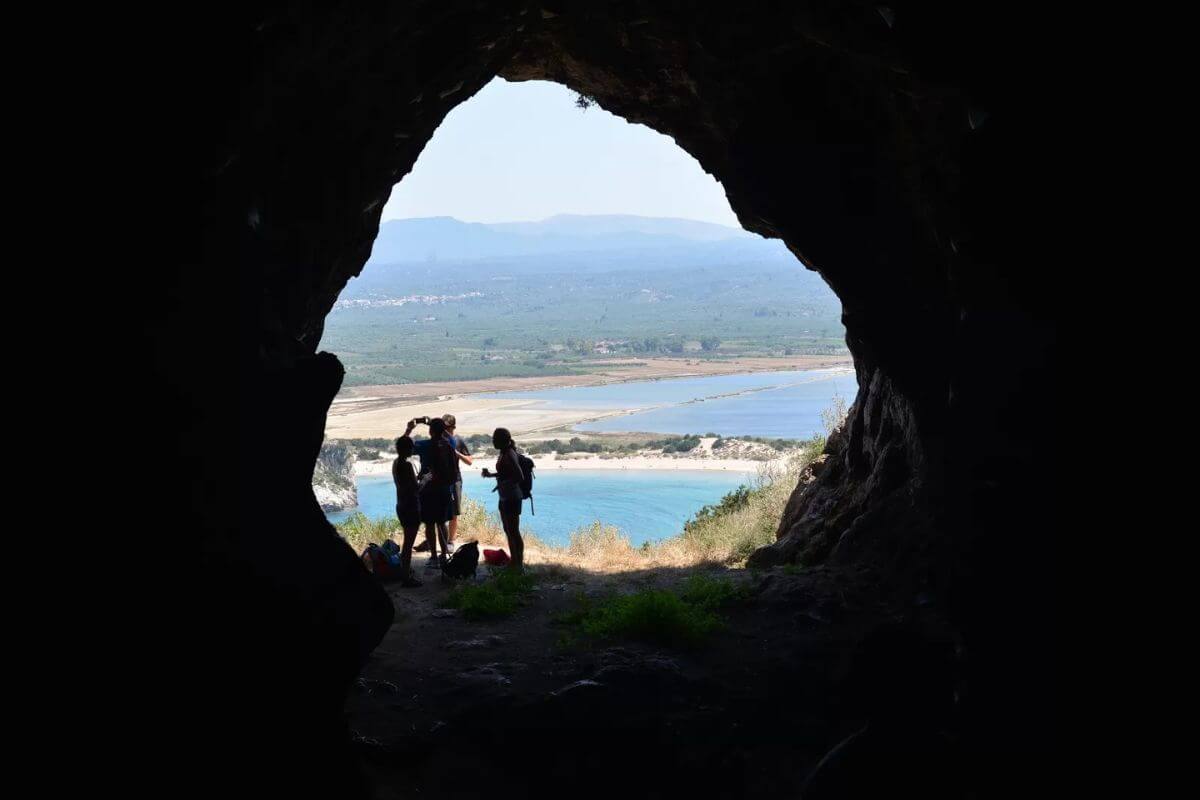
5. Nestor’s Cave: Inside the Cinematic World of the Cyclops
High above Voidokilia beach lies a cave that has carried several stories across the centuries.
Local tradition associates it with King Nestor and his cattle. Another tradition connects the cave with Hermes, the cunning young god who stole Apollo’s cattle. These stories already made the cave part of the mythological landscape of Messenia long before a film crew arrived.
For Christopher Nolan’s The Odyssey, Nestor’s Cave became the setting for one of the epic’s most famous episodes: Odysseus’ encounter with Polyphemus.
In Homer’s poem, Odysseus and his companions enter the cave of the Cyclops and wait for its owner to return. Polyphemus traps the men inside, devours several of them and blocks the entrance with a huge stone. Odysseus eventually blinds him and escapes beneath the Cyclops’ sheep.
His cleverness saves the surviving crew, but his pride creates a new enemy. As the ship sails away, Odysseus reveals his true name. Polyphemus then calls upon his father, Poseidon, to punish him, turning the voyage home into a struggle against the god of the sea.
Homer never securely locates the Cyclopes in Messenia. The connection between Polyphemus and Nestor’s Cave belongs to Nolan’s cinematic interpretation, not to the original geography of the poem.
That distinction is part of what makes the location so compelling. A cave already rich in local tradition has now acquired a new layer of meaning through film.
Can you enter Nestor’s Cave?
The cave is currently not open to visitors. Its setting and entrance can be appreciated from permitted surrounding routes and viewpoints, subject to official restrictions, weather and local conditions. Visitors should never cross barriers or enter protected areas. The best experience comes from seeing the cave within its wider landscape: the cliffs, Voidokilia beach, the lagoon and the open Ionian Sea.
6. Voidokilia and Almyrolakka: The Landscape of the Cyclops
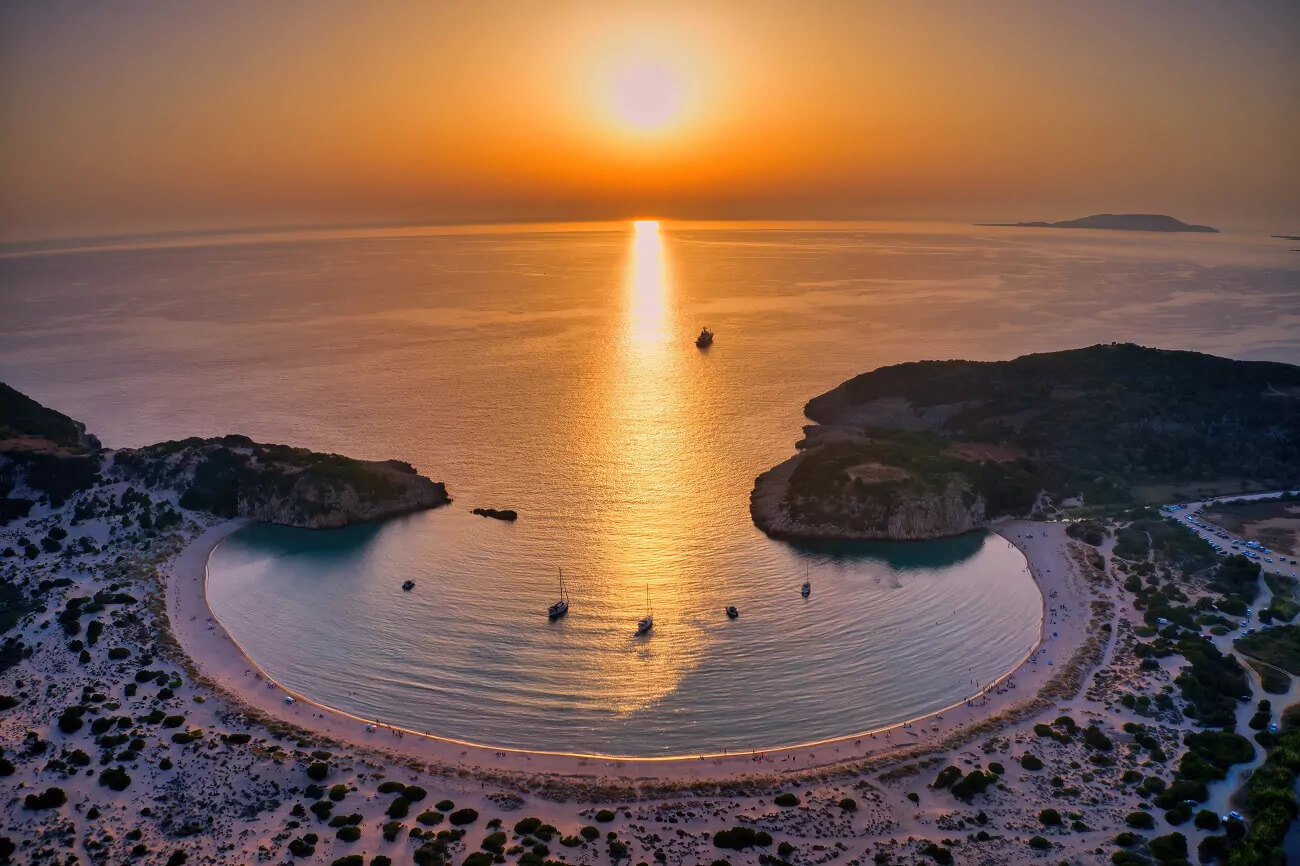
Below Nestor’s Cave, Voidokilia beach forms an almost perfect semicircle of sand around shallow turquoise water. Seen from above, its distinctive shape resembles the Greek letter omega. This is why it is also known as Omega beach.
Together with nearby Almyrolakka Beach, this coastal landscape became part of the Cyclops sequence in Nolan’s film. Here, the natural environment supplies what constructed scenery could not: an elemental Mediterranean world of rock, sand, sea and exposure.
Voidokilia, however, is far more than a filming location. The beach lies beside the Gialova Lagoon, one of the most important wetlands in southern Greece and a habitat for migratory birds. The wider area combines natural beauty, archaeological remains and centuries of human activity.
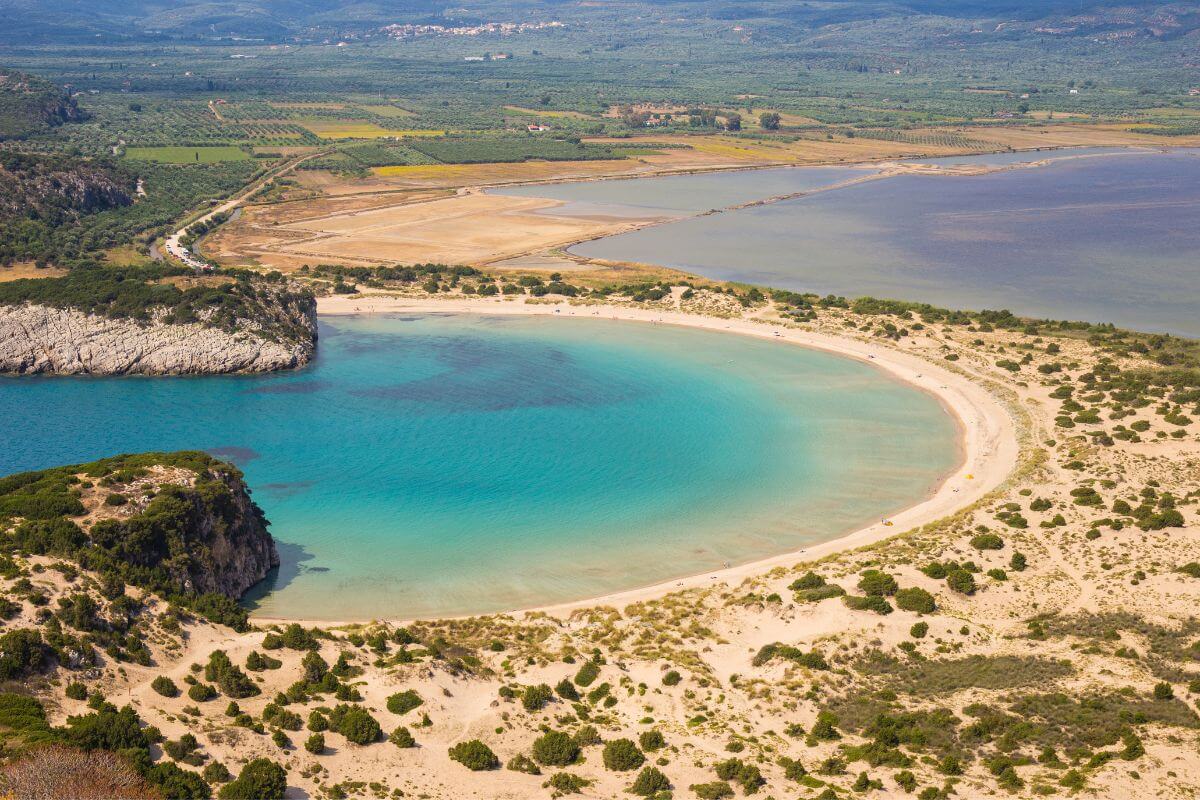
Above the bay stand Nestor’s Cave and the remains of Palaeokastro. Across the lagoon, the landscape opens toward Navarino Bay, where another decisive chapter of Mediterranean history unfolded during the Greek War of Independence.
The result is a place where prehistoric remains, Homeric associations, medieval fortifications, modern history and contemporary cinema coexist within a remarkably small area.
How to experience the area responsibly:
- Visit early in the morning or later in the afternoon
- Carry sufficient water and sun protection
- Remain on permitted paths
- Do not disturb dunes, plants or wildlife
- Take all waste away with you
- Check local access and weather conditions before attempting any hike
- Avoid entering Nestor’s Cave, which is not open to visitors
- Voidokilia is especially popular in summer. Spring and early autumn usually offer more comfortable conditions for walking, interpretation and photography.
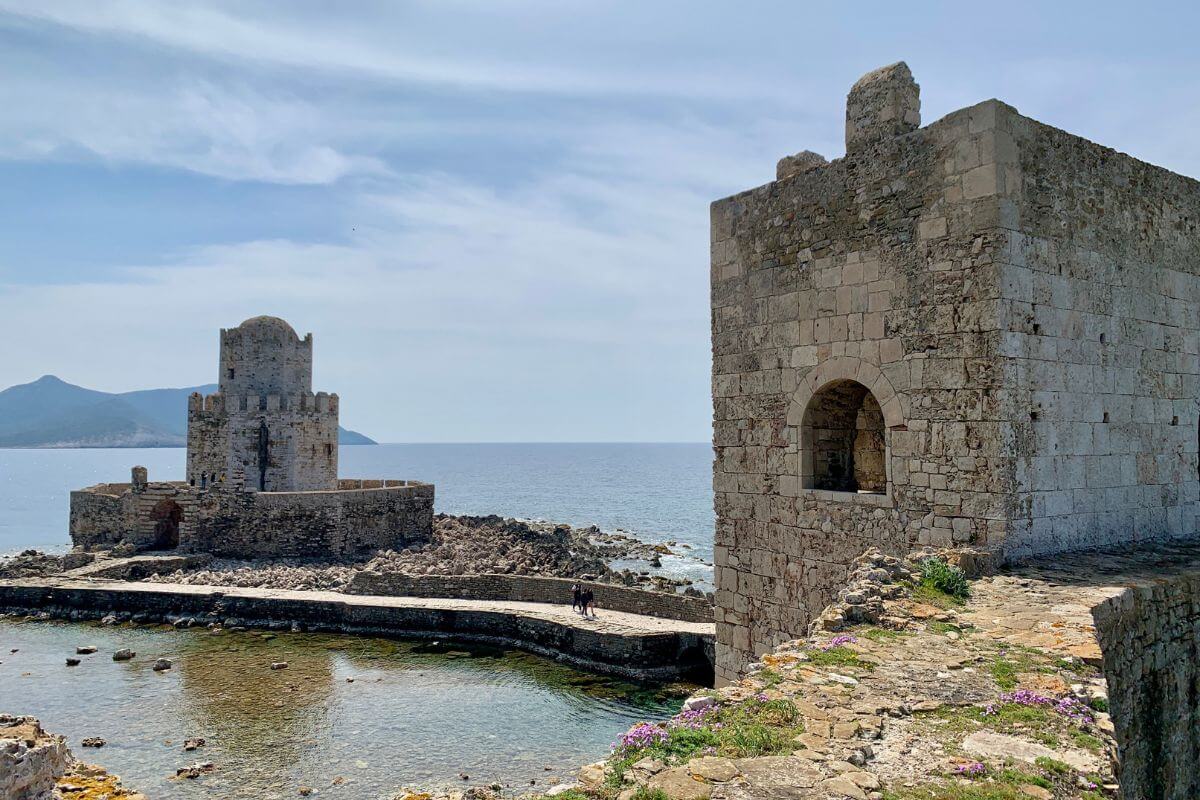
7. Methoni Castle: A Medieval Fortress Becomes a Homeric Palace
At the southwestern edge of the Peloponnese, Methoni Castle stretches across a rocky peninsula into the Ionian Sea.
Its walls, gates and towers tell a story that belongs to medieval and early modern Mediterranean history. Venetians, Ottomans, soldiers, merchants and sailors all passed through Methoni, which occupied a strategic position on maritime routes between East and West.
A stone causeway leads from the main fortress to Bourtzi, the small octagonal sea fort that rises at the tip of the peninsula. Surrounded by water, the monument has a theatrical quality even before cinema adds another story to it.
In Nolan’s Odyssey, Methoni Castle is transformed into the palace of Menelaus and Helen. It is here, within the film’s imagined geography, that Telemachus seeks information about his missing father.
The real Methoni Castle is not Homeric, Mycenaean or Spartan. Its surviving architecture belongs to a much later period. Yet this is precisely what makes the visit valuable.
Travelers can compare the monument’s authentic history with the setting created for the screen. It becomes a lesson in how filmmakers use existing architecture to make an ancient world feel physically real, even when the monument belongs to another age.
What to experience at Methoni Castle:
- The bridge and monumental entrance
- The extensive interior of the fortress
- The sea walls
- The causeway to Bourtzi
- Views across the Ionian Sea
- The real Venetian and Ottoman history behind the cinematic setting
Travel tip: Methoni is an easy addition to a stay around Pylos or the southwestern coast of Messenia. Allow enough time to explore on foot, especially if you want to continue along the causeway toward Bourtzi.
8. Acrocorinth: From a Historic Stronghold to Nolan’s Epic World
Acrocorinth rises more than 500 metres above the plain of Corinth. Its position controls the land routes connecting central Greece with the Peloponnese, which made the hill strategically important for more than two thousand years.
Ancient Greeks, Romans, Byzantines, Franks, Venetians and Ottomans all used and reshaped the fortress. What visitors see today is therefore not a single ancient monument, but an enormous fortified landscape composed of many historical layers.
Christopher Nolan selected Acrocorinth as one of the Greek locations for The Odyssey. Its ancient walls and commanding views over the Corinthian landscape became part of the film’s cinematic world and its telling of Agamemnon’s return to Mycenae.
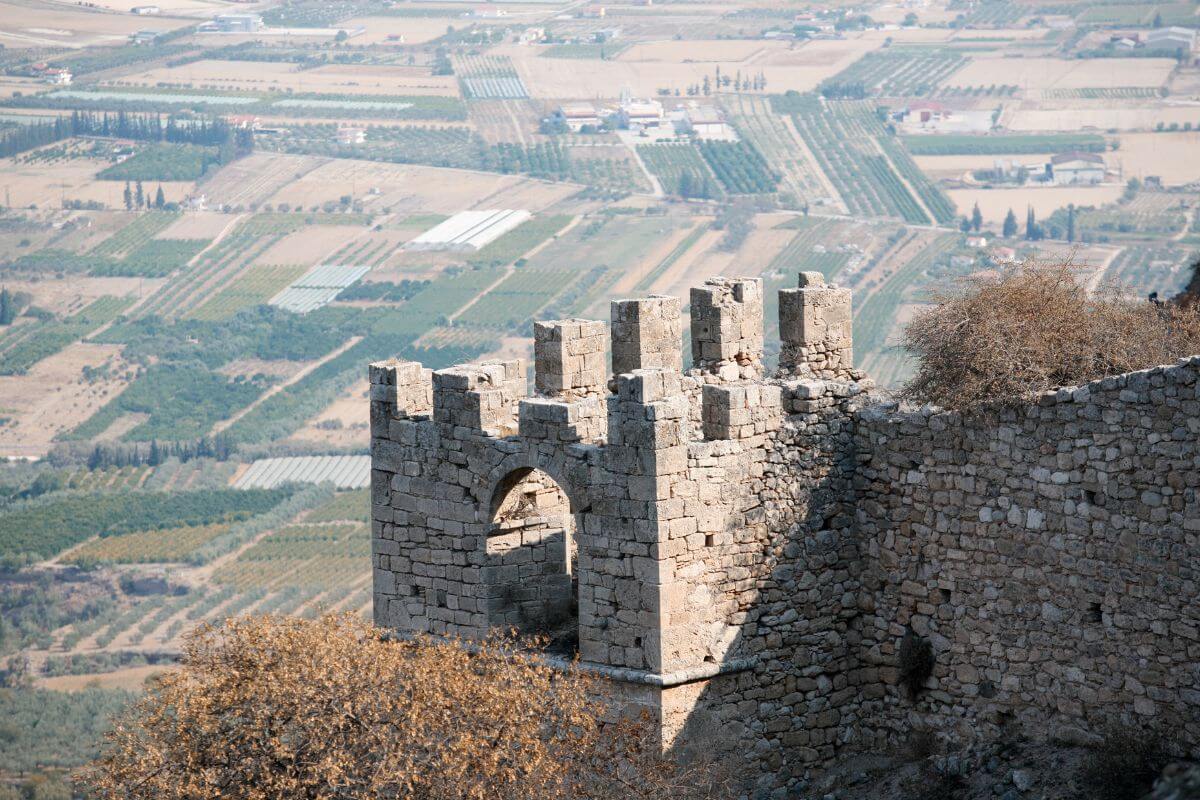
The visual substitution is important. Acrocorinth is not the archaeological site of Mycenae, and the surviving fortress does not represent a Mycenaean palace. To understand the complete story, travelers should visit both places.
At Acrocorinth, they can experience the scale and drama required by cinema. At Mycenae, they encounter the real Bronze Age centre associated with Agamemnon and the House of Atreus.
What to experience at Acrocorinth:
- The successive fortified gates
- The extensive walls
- Remains from different historical periods
- Panoramic views over ancient Corinth and the Isthmus
- A comparison between the real fortress and its cinematic transformation
Travel tip: The interior includes steep, uneven ground with limited shade. Supportive footwear, water and suitable weather conditions make a considerable difference. Acrocorinth can be combined with ancient Corinth or Mycenae, and can be enjoyed as a day trip from Athens.
Can You Visit All Eight Places in One Journey?
Yes, but the journey should be designed around geography rather than simply following the order of this article. Most of Nolan’s confirmed Greek filming locations are concentrated in the Peloponnese. Ithaca forms a separate island chapter and requires additional transport planning. A meaningful itinerary could be structured in three parts:
A Shorter 6 to 7-Day Journey
Focus on Athens and the Peloponnese:
- Athens for the gods, myths and historical context
- Acrocorinth and Mycenae
- Sparta and the ancient Acropolis
- Pylos and The Palace of Nestor
- Voidokilia beach and Nestor’s Cave
- Methoni Castle
This version works particularly well for travelers most interested in archaeology and filming locations.
A Complete 11 to 13-Day Journey
Continue to Ithaca:
- Athens
- The Homeric and cinematic locations of the Peloponnese
- Ithaca, with time for archaeology, villages, landscapes and a private sailing experience
Ferry connections to Ithaca vary according to season and departure point, so the precise order of the journey should be designed around the traveler’s dates.
See also: The Odyssey Trip in Greece | From Homer to Nolan
When Is the Best Time to Visit The Odyssey Locations in Greece?
For most cultural travelers, the most comfortable periods are:
- Late April to early June
- Early September to late October
During these months, temperatures are generally better suited to archaeological sites, walking routes and fortress exploration. The landscape is also especially beautiful in spring.
July and August offer the widest range of island and coastal services, but archaeological sites and exposed locations can become extremely hot. Acrocorinth, Mycenae, Methoni Castle and the area above Voidokilia offer limited shade, making early starts particularly important.
Winter journeys are possible in the Peloponnese, but ferry connections, island services and weather conditions may limit an Ithaca extension.
Do You Need to Have Read The Odyssey Before Visiting?
Not at all. A good guide should make the characters, journeys and themes accessible without expecting prior knowledge. Travelers can discover the story through the landscapes themselves, learning about Odysseus, Penelope, Telemachus, Athena, Poseidon, Nestor, Helen, Menelaus and Agamemnon as each becomes relevant.
For devoted readers, the same journey can explore the text more deeply:
- Nostos: homecoming
- Xenia: the relationship between host and guest
- Kleos: fame and the memory left behind
- Metis: intelligence, adaptability and cunning
- Identity and disguise
- Storytelling as a means of survival
- The effects of war on those who return
- Penelope’s intelligence and agency
- Telemachus’ transition into adulthood
This flexibility is one reason a private Homer-inspired trip works so well. The journey can focus on literature, mythology, Bronze Age archaeology, film locations or a carefully balanced combination of all four.
How to Experience Homer’s Greece Beyond a Checklist
It would be possible to rent a car, save the locations on a map and photograph each one. But that would reveal only the surface.
Without context, Mycenae can appear to be a collection of walls. Pylos can look like the foundations of an ancient building. Methoni may seem to be simply a beautiful castle, while Voidokilia becomes another beach seen online.
The meaning lies in the connections.
Why does Agamemnon’s homecoming matter to Odysseus? Why must Nestor welcome Telemachus before asking his name? Why does Odysseus survive through intelligence, yet repeatedly suffer because of pride? What can Linear B tablets tell us about the society that existed centuries before Homer? Why did Nolan choose a medieval fortress to represent a Bronze Age palace?
These questions transform sightseeing into interpretation.
Created by historians, archaeologists and storytellers, our private journey through Homer’s Greece connects the poem, the archaeology, the landscape and the film without confusing one for another.
Because Homer’s world cannot be found in one ruin, one island or one film location. It emerges gradually, through the stories connecting them all.
Plan Your Own Journey from Homer to Nolan
A Homer-inspired journey through Greece can be adapted to your available days, pace and interests.
You may choose a shorter exploration of Mycenae and the filming locations of the Peloponnese, follow Telemachus from Pylos to Sparta, or continue across the Ionian Sea to Ithaca.
Private transfers, expert guides, carefully selected hotels, sailing, culinary experiences and additional destinations can all become part of the journey.
Discover The Greece Behind The Odyssey, our private and fully customizable Curated Trip!
From Homer’s verses to Nolan’s screen, these landscapes continue to tell the story.
Today, the journey can be yours.
Contact us to plan your own Homeric journey to Greece!
See also:
About the author: Written by Dimitris Stratigentas, Historian and Archaeologist, Founder of Greek TravelTellers. Our team at Greek TravelTellers consists of academics and lovers of Greek culture. Our vision is to convey our knowledge and Greek values through immersive experiences and curated trips. Through our blog, we hope to bring Greek history and culture closer to you. Feel free to learn more about us.